At Holy Cross Social Service Society, we believe that sustainable livelihoods and climate-resilience farming are essential for reducing poverty and improving the well-being of Indigenous communities. Climate change, unpredictable rainfall, declining soil fertility, and limited livelihood opportunities continue to affect the lives of small and marginal farmers, particularly women. Through community-based interventions, capacity building, and the promotion of climate-smart agricultural practices, we empower farming families to enhance their productivity, strengthen food security, increase household incomes, and build resilience to the impacts of climate change.
Our Initiatives
Women Farmer Groups for Collective Action
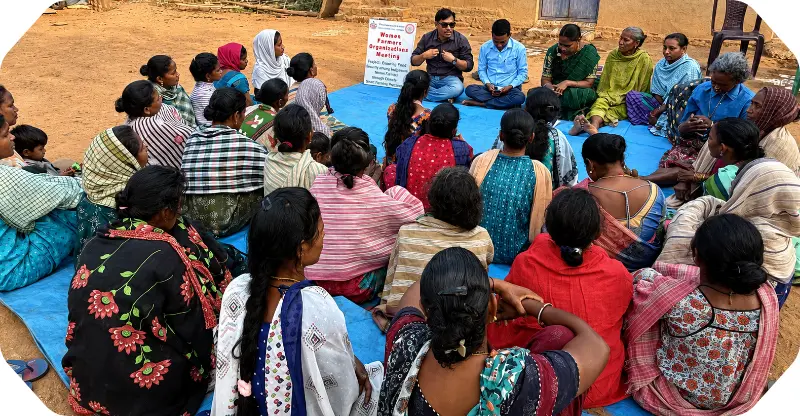
Holy Cross Social Service Society promotes the formation and strengthening of Women Farmer Groups to encourage collective action, knowledge sharing, and community leadership. These groups provide a platform for women to exchange farming experiences, access training programs, adopt improved agricultural practices, and collectively address challenges related to farming and livelihoods. By working together, women strengthen their decision-making capacity, improve access to resources, and become active contributors to sustainable agricultural development.
Climate-Resilient Agriculture Awareness
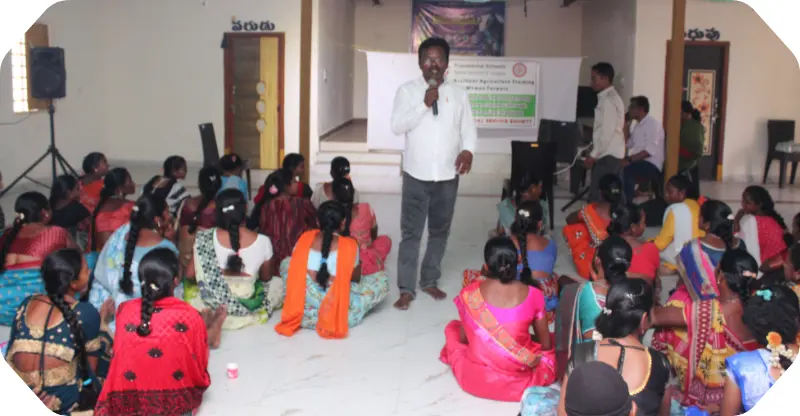
Holy Cross Social Service Society conducts awareness programs on climate-resilient agriculture to help farmers adapt to the changing climate and protect their livelihoods. Training sessions focus on sustainable farming practices, soil and water conservation, crop diversification, efficient water use, and natural resource management. These initiatives equip farmers with practical knowledge and skills to improve agricultural productivity, reduce environmental risks, and enhance resilience to climate change.
Training on Bio-Pesticides
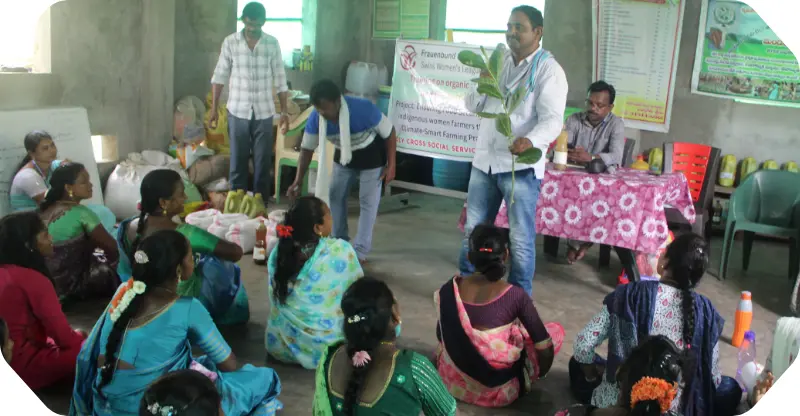
To promote environmentally sustainable farming, Holy Cross Social Service Society provides practical training on the preparation and use of bio-pesticides made from locally available natural ingredients. Farmers learn about healthier crops. The initiative encourages eco-friendly agriculture while safeguarding the health of farming families and the environment.
Backyard Kitchen Gardens
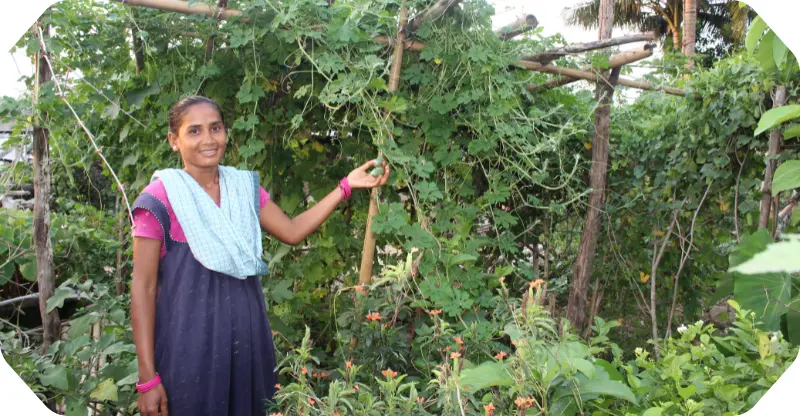
Holy Cross Social Service Society encourages households, especially women, to establish backyard kitchen gardens to improve household nutrition and food security. Families receive training on cultivating seasonal vegetables, fruits, and medicinal plants using sustainable farming methods by providing seeds. Kitchen gardens increase access to fresh, nutritious food year-round, reduce household food expenses, and provide opportunities to generate additional income by selling surplus produce.
Promoting Millet Cultivation
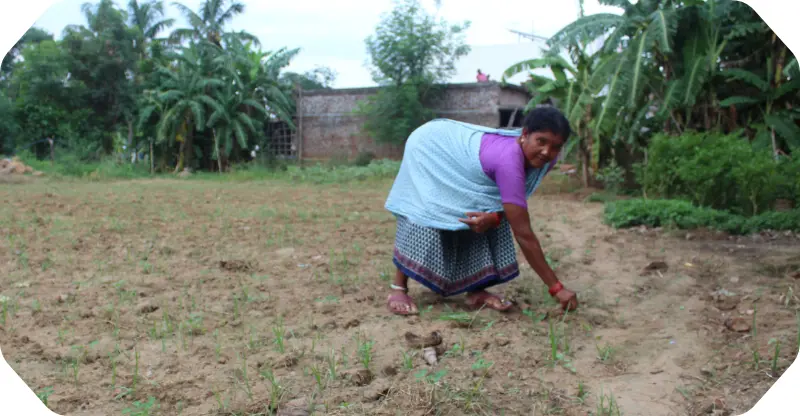
Holy Cross Social Service Society promotes the cultivation of traditional millets as climate-resilient and nutritious crops suitable for rain-fed farming systems. Farmers are encouraged to adopt improved millet cultivation practices that require less water, withstand changing climatic conditions, and contribute to soil health. By reviving millet cultivation, the organization supports food and nutritional security, conserves traditional farming knowledge, strengthens climate resilience, and creates sustainable livelihood opportunities for Indigenous farming communities.
Training on Non-Timber Forest Products (NTFPs) Processing
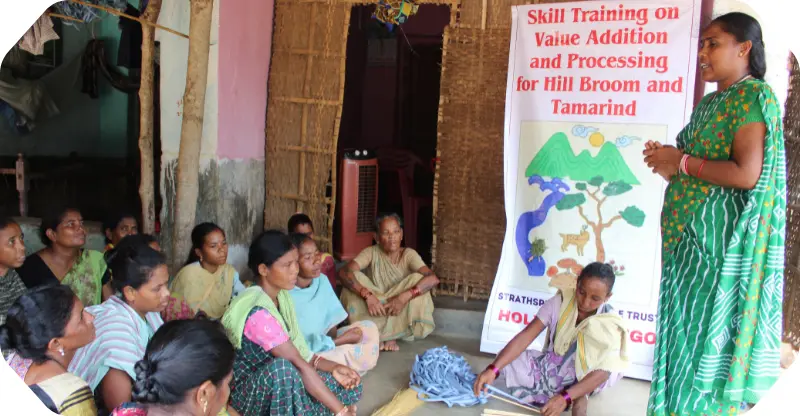
Holy Cross Social Service Society strengthens the livelihoods of Indigenous women by providing training on the processing and value addition of Non-Timber Forest Products (NTFPs). Women receive practical training on processing locally available forest products such as hill brooms, tamarind, amla (Indian gooseberry), and other minor forest produce. The program enhances their technical skills, improves product quality, and promotes value addition, enabling women to increase their income and access better market opportunities. By supporting sustainable utilization of forest resources, the initiative contributes to women’s economic empowerment while preserving traditional knowledge and promoting environmentally responsible livelihoods.